Calling Forth The Matriarchy
It’s time for us to seriously reconsider what leadership at the highest levels should look like.

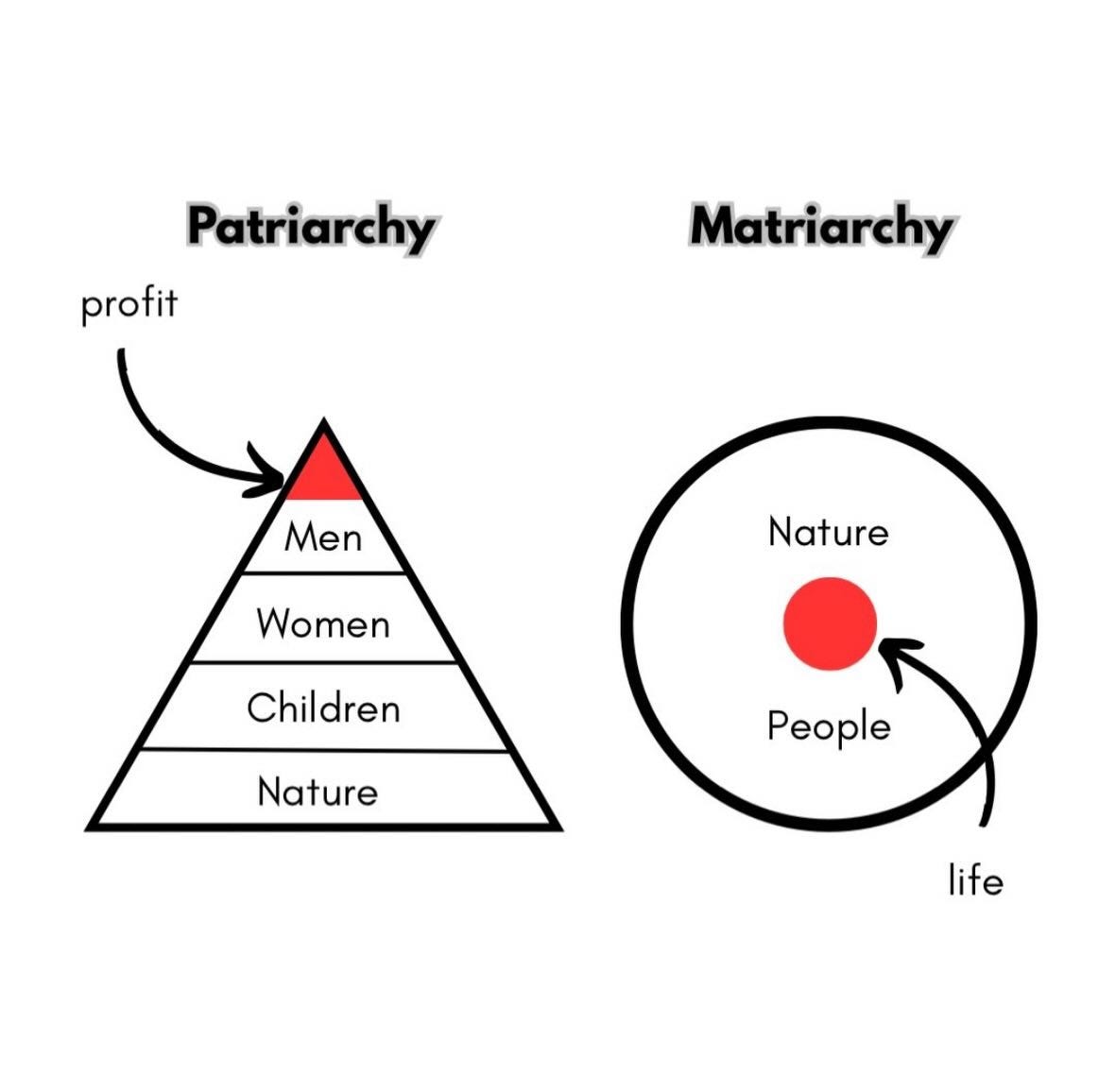
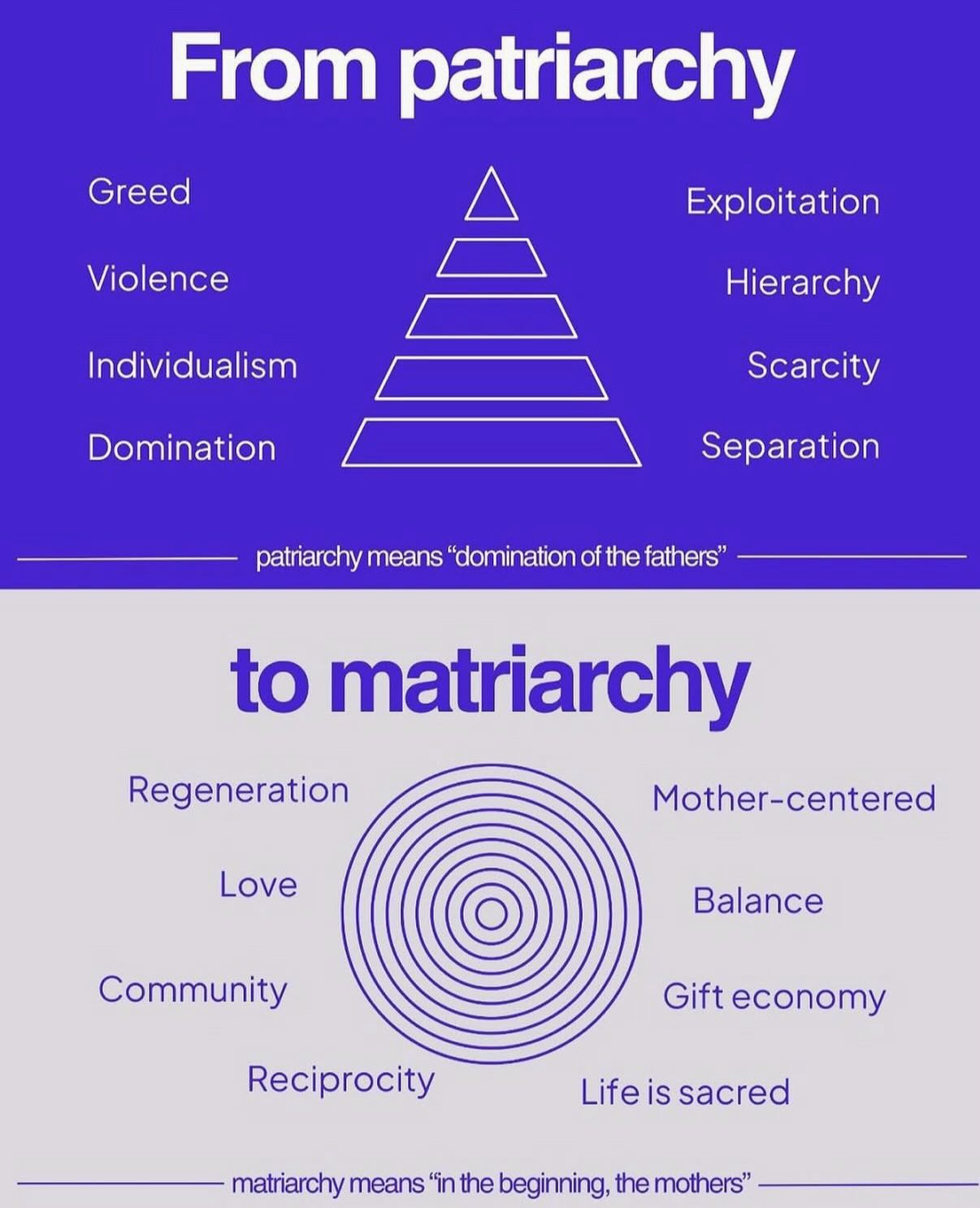
The Epstein files have laid bare a vast network of morally and ethically corrupt people at the top of our global power pyramid. That pyramidical hierarchy is an expression of patriarchy, an unnatural system that men have shaped for only a tiny percentage of our existence as a species—between 10,000 and 6,000 years, or only 2–3% of our human history. In that fraction of time, this hierarchical system of Patriarchy has created a planet-wide threat to our continued, collective survival.
Matriarchy is not “Patriarchy but with women on top of the power structure”
Many people mistakenly believe that matriarchy is just “patriarchy but for women”, but this is incredibly inaccurate. Matriarchy is a completely different system, one not built on hierarchy, dominance, competition and short-term thinking. Instead, matriarchy is rooted in nurture, collaboration, protection of life, and long-term thinking. And matriarchs don’t “rule” over others the way patriarchs do; instead, they guide communities towards wisdom through mediation and collective care.
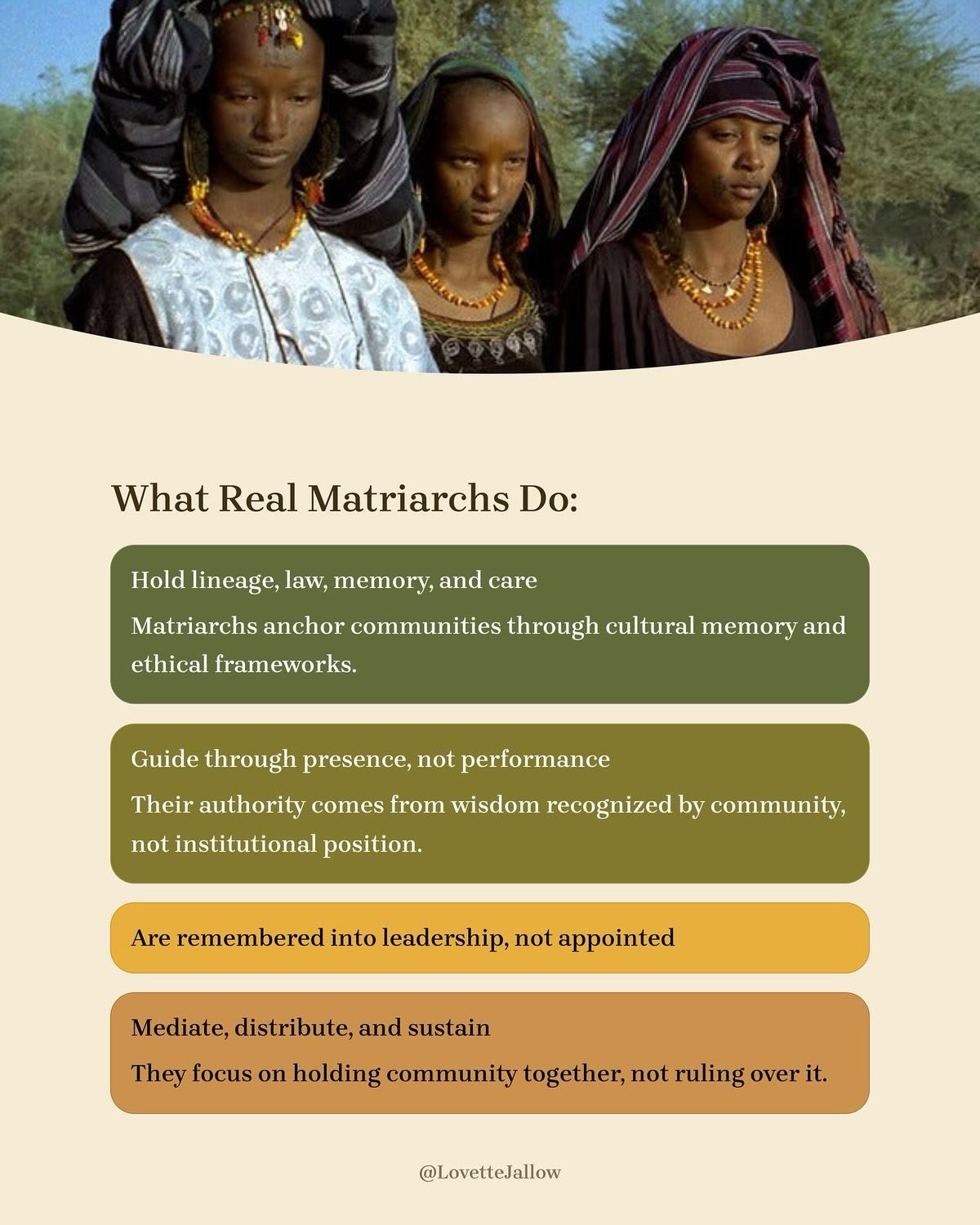
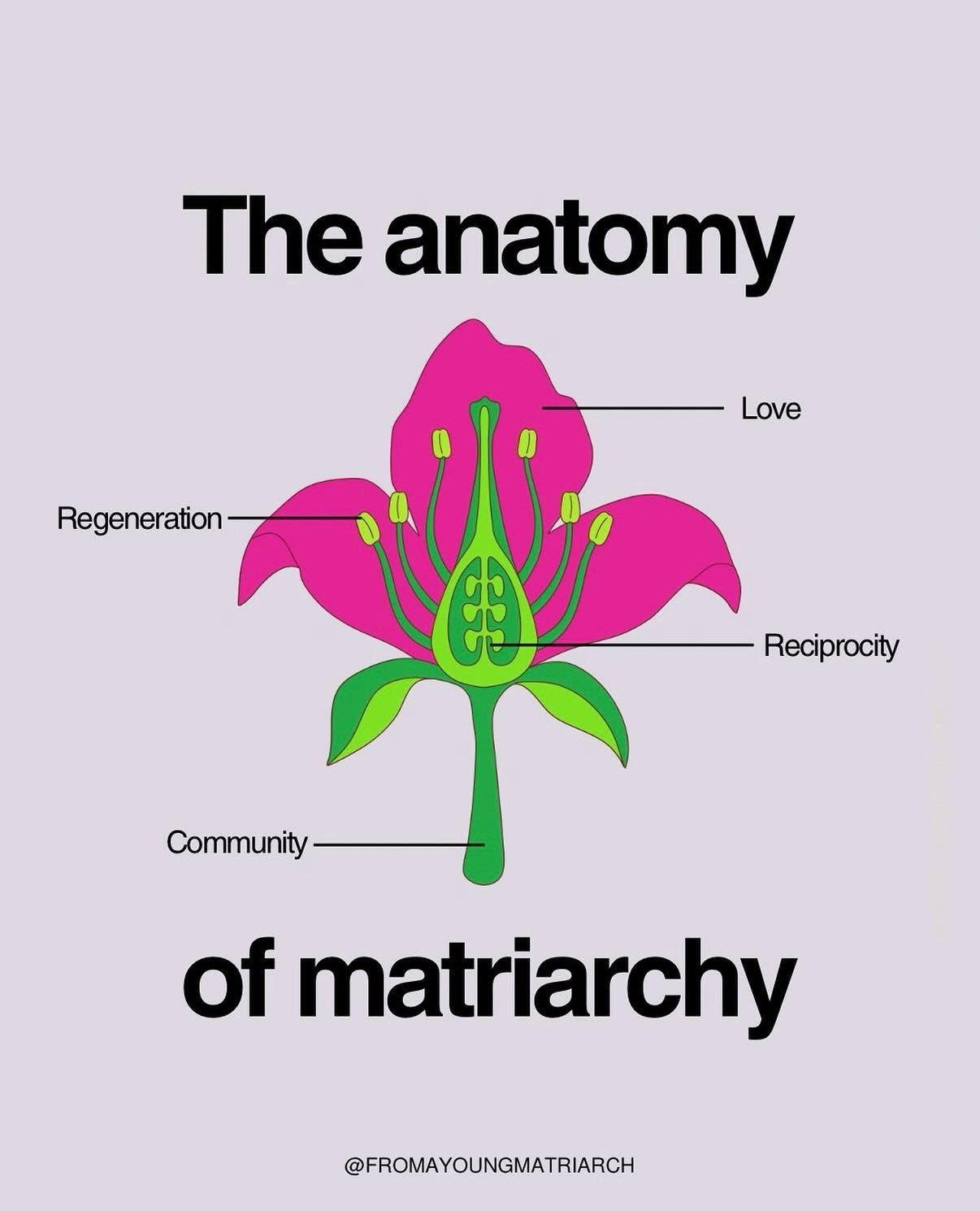
The elements of matriarchy include love, reciprocity, regeneration, and community — things our world desperately needs more of, today and tomorrow and every day forward.
Understanding the role and impact of power in patriarchy and matriarchy
Patriarchy uses internal models for power through hierarchy, dominance, force, and violence as a control mechanism. Patriarchy sees everyone as either an ally, or a foe to be controlled. In stark contrast to that, matriarchy sees everyone as people, and all of us in need of healing, of integrating our pains and traumas, of wanting to be of service and find fulfillment in life.
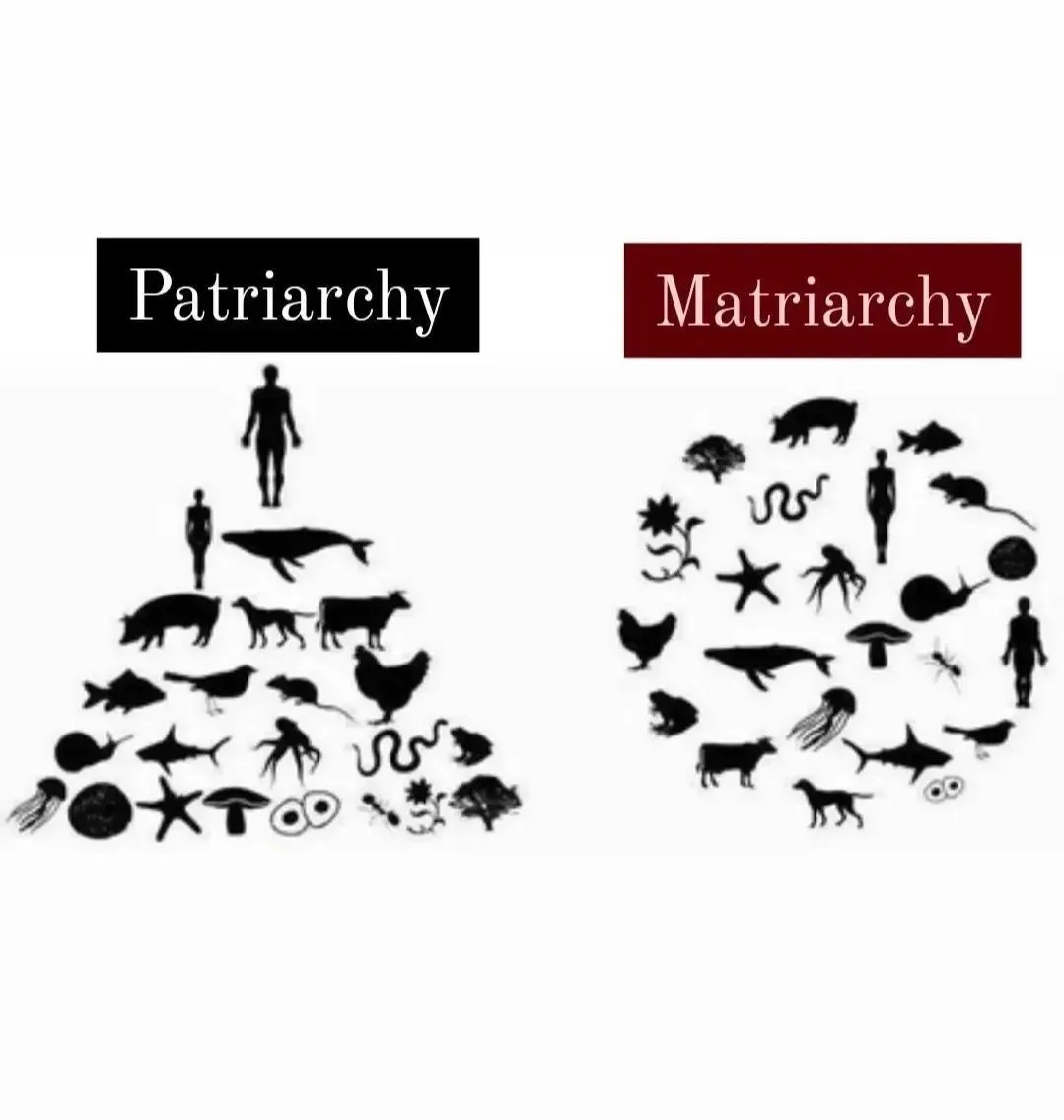
As psychologist Dr. Nore Salman puts it: in matriarchy, power is relational, not hierarchical. She goes on to explain that leadership is earned through care, not control, and how men are liberated by matriarchy. Liberated to be themselves, and to be relational, creative, and whole. More importantly, in matriarchy, strength is understood through sustainability—how well and how long can we survive together—rather than through domination.
Someone put it perfectly when they said “I don’t want a female President; I want a council of indigenous grandmothers.”
Fear and violence
Patriarchy is the reason why, worldwide, a leading cause of death for women is violence by a man. As Kar Brulhart points out, “we are not angry enough.” (With thanks to Sarah Durham Wilson for some of these sources.)
Furthermore, as Gabrielle Blair aka Designmom explains, Patriarchy doesn’t actually make sense. From a biological and evolutionary point of view, males are the secondary sex: necessary, but interchangeable.
In nature, males are interchangeable and somewhat disposable laborers, while females are primary, and essential for a community to thrive and grow. Females are so essential that human DNA perpetually preserves the maternal line—females pass down an unbroken genetic chain that is traceable by lineage, while “interchangeable” males do not.
Among the many great parts in Designmom’s article (like the dairy goat story), this bit stood out to me in particular:
Men tend to fear matriarchy because they think it means men being treated the same way men currently treat women. But they need not fear.
This is also true for white narcissism and their fear of black and brown people’s liberation: that is, the belief that if those they have oppressed for centuries would ever get on top, they will inflict retribution and violence on them in revenge.
I cannot stress this enough: this belief is incorrect. In matriarchy, as well as in black and brown liberation, the goal never was and never will be to enact the very same harms and oppression that has been inflicted upon us. It always has been, and always will be, to put an end to those harms altogether, because we recognize that everyone suffers under this system—just in different ways.
So yes, I am a man (and more) who is calling forth the matriarchy. Give us this day our council of indigenous grandmothers, please and thank you.